


Will the Circular Economy Save the Planet?' Of course it will
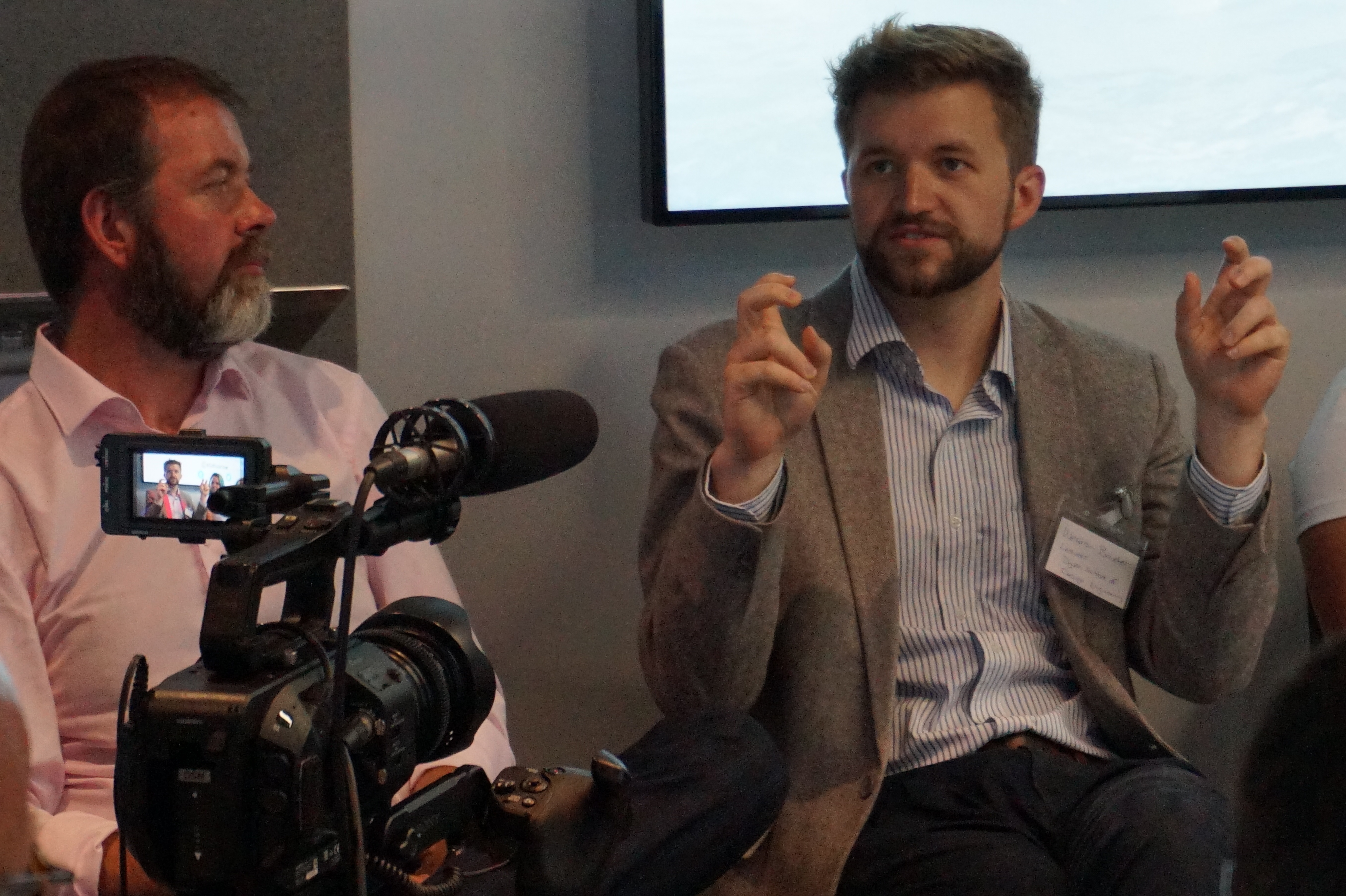
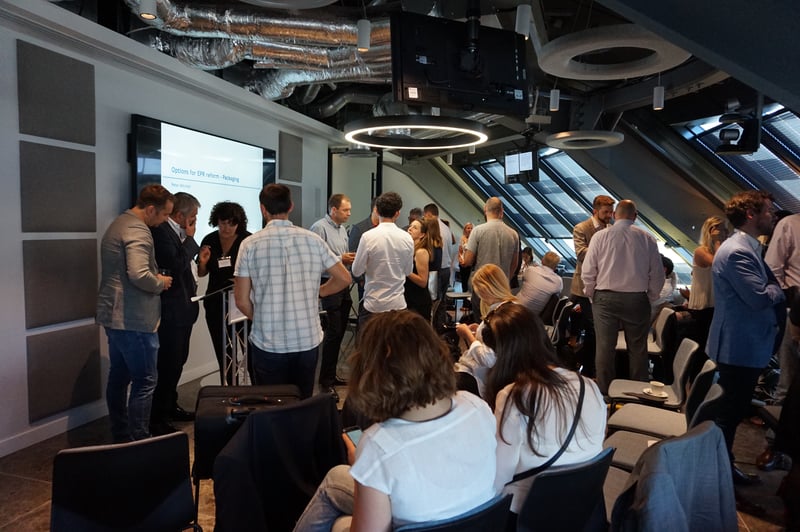
We had a really interesting time together at Ditto Sustainability's event on 27 June at the City of London offices of investor, IP Group. The subject of discussion was 'Will the Circular Economy save the Planet?' and about 50 of us crowded the rooftop room. I acted as compere for this afternoon meeting, and this was really fun because the speakers were well informed, sharp, and up to the task of replying to some rather provocative questions from me and the audience.
Here's the video of the day...
The day in film
 We got underway with a fascinating presentation from Dr Weston Baxter at the Dyson School of Design Engineering at Imperial College London who raced us through some of the more interesting startups and inventions his students have produced. The edible water ball was subject of some comments from the audience, positive as well as negative, but an exciting solution, for example, in sporting events like road races where water bottles get thrown everywhere – or for sauces used, for example, in burger bars. Technology has caught up with plastics at last, foreseeing an end to a lot of throw-away, polluting plastic in the next years.
Then Wendy Rayner of NHS Scotland took us through how they manage their data on waste as a way of driving efficiency and reducing overall waste.
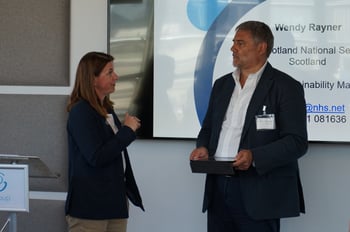 NHS Scotland has the ability to monitor and manage their waste and resource data for all 14 NHS Boards, using Ditto Sustainability software. Scotland itself spends about 40% of its government budget on providing healthcare, so any savings that can be made through better waste management are essential. She also underlined how plastics are an important material for health care – from tubes to syringes to sanitised packaging, plastics help the healthcare process throughout. Her biggest challenge in hospitals is the large amount of non-healthcare waste generated by visitors – in the cafes and shops of the hospitals themselves.
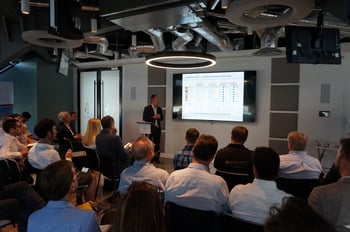 Peter Mitchell of Valpak explained the concept of
Extended Producer Responsibility (EPR) and how this will drive design for better packaging, reduce waste, improve recycling, and bring financial resources to the councils to do all this. Currently he demonstrated that the UK packaging industry contributes about 10% of what it will have to in the future to meet new EU targets on packaging recycling, introduced in July 2018.
Peter Mitchell of Valpak explained the concept of
Extended Producer Responsibility (EPR) and how this will drive design for better packaging, reduce waste, improve recycling, and bring financial resources to the councils to do all this. Currently he demonstrated that the UK packaging industry contributes about 10% of what it will have to in the future to meet new EU targets on packaging recycling, introduced in July 2018.Dr Adam Read is always stimulating to listen to, being a waste manager with vast experience both at home and abroad.
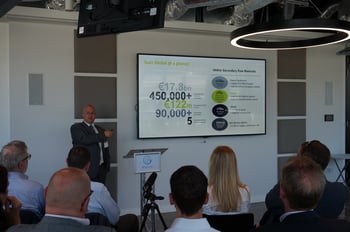 Now the External Affairs Director of SUEZ UK, he presented their UK vision for resource management, and how waste to energy is part of the transition to a more resource efficient economy in which less waste is generated, and more is recycled.
But he also showed how Suez manage and recycle complex waste streams in their operations across the globe, supporting and developing startups that bring innovation to the sector.
Now the External Affairs Director of SUEZ UK, he presented their UK vision for resource management, and how waste to energy is part of the transition to a more resource efficient economy in which less waste is generated, and more is recycled.
But he also showed how Suez manage and recycle complex waste streams in their operations across the globe, supporting and developing startups that bring innovation to the sector.Two young ladies from the charity expedition Status Row, Caroline Wilson and Jess Rego, gave us a completely different angle.
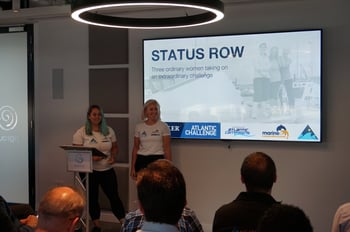 Three of them are going to row across the Atlantic later this year as a way of raising attention on the plastics pollution our oceans are suffering.
This has to be about the bravest decision anyone can take, let alone three young women with very limited experience of the oceans. Anyone wanting to help them can sponsor the attempt and help draw even more attention to the plight of our seas.
Three of them are going to row across the Atlantic later this year as a way of raising attention on the plastics pollution our oceans are suffering.
This has to be about the bravest decision anyone can take, let alone three young women with very limited experience of the oceans. Anyone wanting to help them can sponsor the attempt and help draw even more attention to the plight of our seas.Joe Papineschi, a Director of Eunomia, looked at the theory of Circular Economy and what it means with the new European legislative package entering into force this July.
Higher recycling targets, revised calculation methodologies, lower recourse to landfill, bans and taxes on certain throw-away plastic products, obligatory food waste collections...
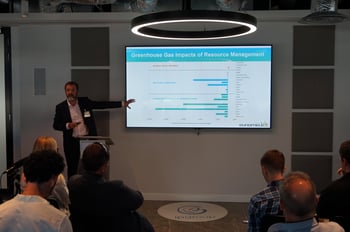 ...a resource revolution is on the way.
Finally our host, the CEO of Ditto Sustainability, Daniel Botterill, summed up how AI (artificial intelligence) could help drive the sustainability agenda – data management, monitoring, teaching and learning, compliance, and analysis. New technologies now allow us to undertake statistical analyses of our processes, our supply chains, client behaviour, compliance to law and ESG ( Environmental, Social and Governance) criteria. The continuous 24/7 availability of comprehensive data makes decision making easier, more effective and more sustainable. Ditto Sustainability presented their new learning platform, Resourceful, which was offered as a free trial to all those present. It helps us understand the whole sustainability argument in an easy to approach online learning module, essential learning for staff and organisations wanting to improve their environmental credentials.
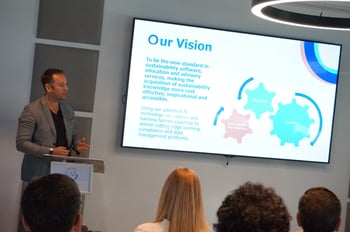 So...Will the Circular Economy Save the Planet?
Of course it will! And it has enormous potential to drive sustainability!
However:
-
We must find ways to de-jargonise the concept and ensure engagement is not confined to the developed world. We must also ensure we can monitor subsequent actions and consequences.
-
Technology will empower organisations and ethical consumers, but businesses will need to adapt and embrace the new world of transparency and extended accountability.
- Legislation is key to driving change and encouraging a Circular Economy, but it may be worthless without effective enforcement.
Our next event? Sometime this autumn, watch this space. And see you there.
These slides are available at request. Please contact us for more information.